
OptiMATE CsCl is a prepared solution of CsCl with a density of 1.784 ± 0.014 g/mL, reducing the manual preparation of powder dilution and allowing you to always have the same starting concentration.
Ficoll and Ficoll-Paque™—Cell Separation Made Simple
Published: octobre 22, 2026
Key Takeaways
- Widely used for cell isolation and enrichment workflows.
- Supports high cell viability and recovery.
- Commonly used for PBMC and lymphocyte isolation.
- Provides a simple, well-established workflow.
- Generally not suitable for viral purification, protein fractionation, or nucleic acid purification.
What Is a Ficoll Gradient?
A Ficoll gradient is a density gradient medium used to separate cells according to their density while minimizing cellular stress. Ficoll and Ficoll-Paque™ are commonly used to isolate specific cell populations from complex biological samples, particularly blood, making them a routine tool in immunology, cell biology, and clinical research workflows.
When Should You Use a Ficoll Gradient?
Ficoll gradients are particularly useful when separating and enriching viable cell populations from mixed biological samples. Their simplicity and reproducibility make them a common choice for immune cell isolation and downstream cellular analysis.
-
PBMC Isolation
Separate peripheral blood mononuclear cells (PBMCs) from whole blood for downstream research and analysis.
-
Lymphocyte Enrichment
Isolate lymphocyte populations for immunology and cell characterization studies.
-
Immunophenotyping Workflows
Prepare enriched cell populations for flow cytometry and phenotypic characterization.
-
Clinical Research
Support standardized cell isolation workflows in clinical and translational research environments.
Example Application
Researchers studying immune responses frequently use Ficoll-Paque gradients to isolate peripheral blood mononuclear cells (PBMCs) from whole blood before downstream applications such as flow cytometry and functional assays.
Advantages and Limitations of Ficoll Gradients
Ficoll gradients are valued for their simplicity, high cell recovery, and ability to preserve cell viability. However, they are designed for a relatively narrow range of cell separation applications and may not be appropriate for more complex purification workflows.
Advantages
- Gentle on cells
- Straightforward workflow
- Widely adopted in cell biology laboratories
- High cell recovery rates
Limitations
- Limited application scope
- Lower density range than some alternatives
- Not suitable for most viral purification workflows
When Is Ficoll Not the Best Choice?
Although Ficoll is highly effective for immune cell and blood cell separation, other density gradient media may be better suited for applications involving viral particles, proteins, nucleic acids, or high-resolution nanoparticle separations.
Consider Alternative Media When...
- Viral vector purification is required.
- Protein fractionation is the primary goal.
- Nucleic acid purification is needed.
- High-resolution nanoparticle separation is required.
Explore Density Gradient Media
OptiMATE Gradient Reagents
OptiMATE Gradient Reagents are designed to simplify density gradient preparation workflows by providing ready-to-use, cGMP-supporting formulations for common gradient applications. For laboratories performing routine density gradient centrifugation, standardized reagents can help improve consistency while reducing preparation time.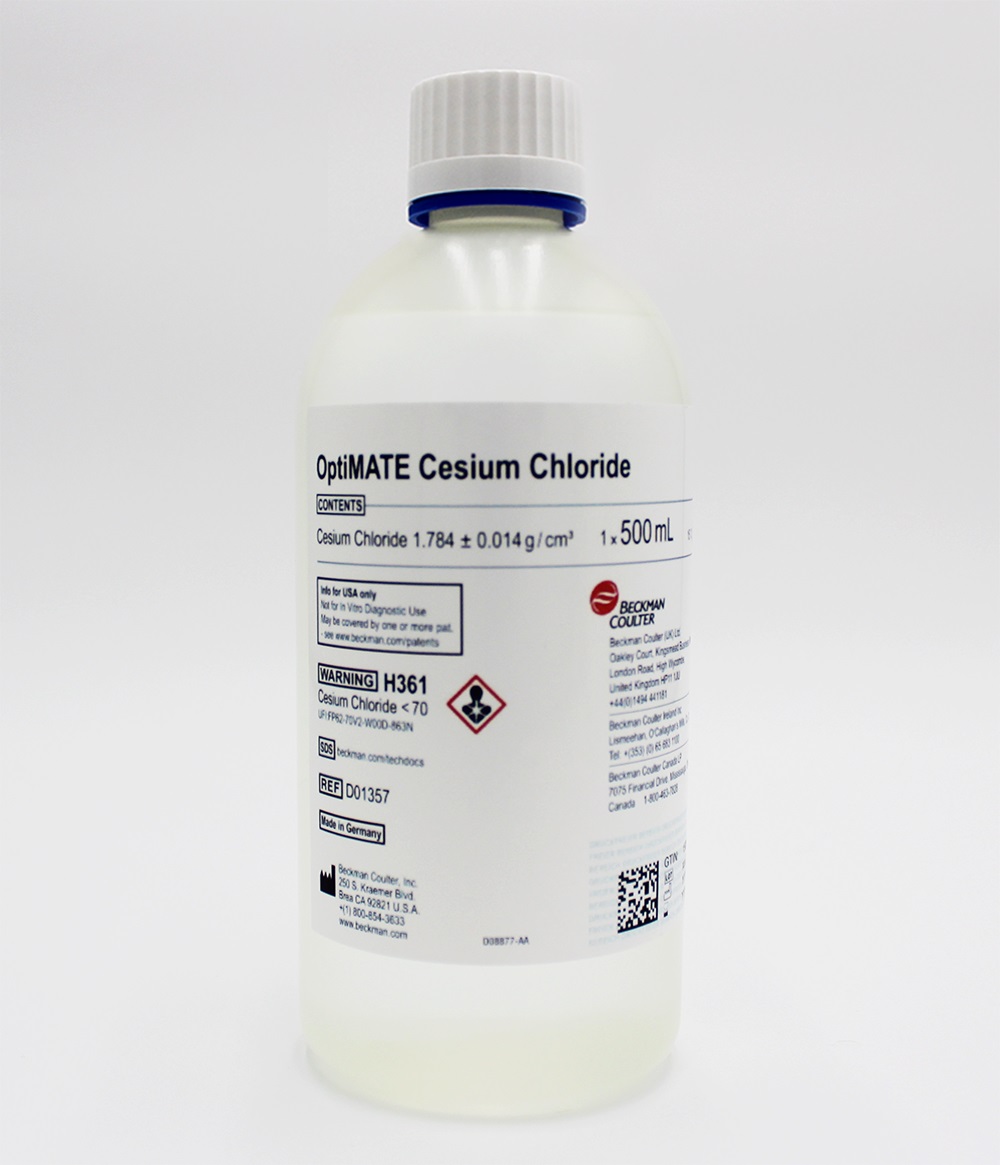
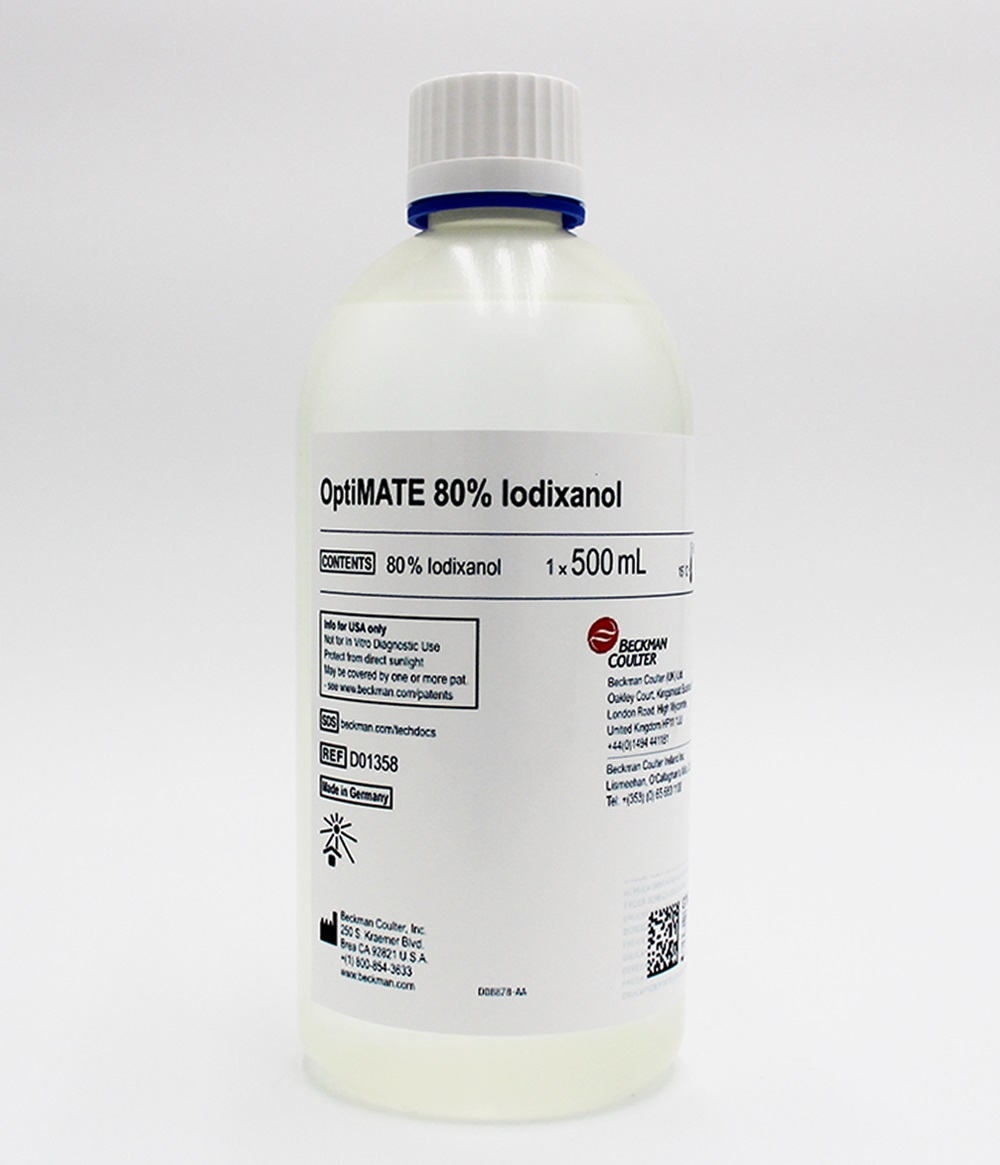
OptiMATE iodixanol is the highest on-market concentration at 80% w/v, enabling you to increase your sample per tube and decrease your bottle-related waste.
Related Resources
FAQ about Ficoll Gradients
What is Ficoll density gradient centrifugation used for?
Ficoll density gradient centrifugation is commonly used for isolating cells, particularly in blood sample processing, such as separating lymphocytes from whole blood.
Its low toxicity and gentle conditions make it suitable for preserving cell viability during separation.
How does Ficoll separate lymphocytes from whole blood?
During centrifugation, blood components distribute according to their density relative to the Ficoll medium. Mononuclear cells form an interface that can be recovered separately from denser red blood cells and granulocytes. The method supports cell enrichment while minimizing cellular stress.
Why is Ficoll-Paque commonly used for PBMC isolation?
Ficoll-Paque is widely used for PBMC isolation because it provides a straightforward density-based cell separation workflow while supporting cell viability and recovery. The enriched PBMC fraction can then be used in downstream applications such as flow cytometry and functional assays.
What is the difference between Ficoll and Percoll gradients?
Ficoll is primarily associated with PBMC and lymphocyte isolation from blood-derived samples. Percoll has a broader role in cell and organelle separation, including mitochondrial and chloroplast isolation. The choice depends on whether the target is a blood-cell population or a broader cell or organelle fraction.

